09
Feb
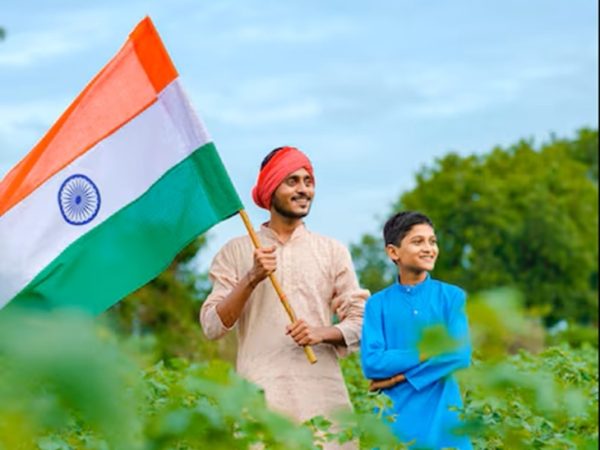
For some, a flag is a cloth, colour, and stitching. For India, it is the voice of billions and the spirit of a civilisation. Known officially as the Tiranga (Tricolour), the national flag has come to represent freedom, unity and the triumph of people who fought for their right to self-govern. It flies over schools, stadiums, homes, embassies, but its true power lies in the emotional resonance it carries for those who look up at it.
Whether you’re viewing the flag during Republic Day celebrations, purchasing an Indian flag online, or just curious about protocol, understanding its deeper meaning enriches the experience.
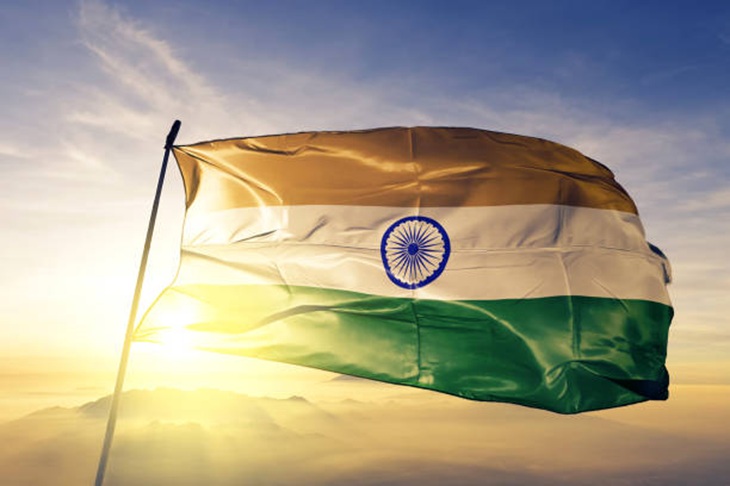
The modern Indian flag was adopted on 22 July 1947, just weeks before independence. Its three horizontal bands carry both philosophical depth and historical context.
The top band is a deep saffron, symbolising courage, sacrifice, and renunciation. It honours those who dedicated their lives to the nation, from political leaders and revolutionaries to scholars and ordinary citizens. Saffron reflects a core principle in Indian thought: moral courage and duty outweigh personal gain.
The centre band is white, symbolising peace, truth, and purity. This stripe underscores the importance of maintaining social harmony in a nation of immense diversity. It also highlights the truth-seeking spirit that guided leaders during constitutional formation and continues to guide democratic processes.
The bottom band is green, representing fertility, growth, and the auspiciousness of the land. Green speaks to India’s agrarian heritage and its commitment to life and renewal.
Centred on the white band is the navy blue Ashoka Chakra, a 24-spoke wheel drawn from the Lion Capital of Ashoka, an emblem dating back over two millennia. The wheel is known as the “Wheel of Dharma,” symbolising law, progress, and motion. Its message is clear: stagnation is not an option; a nation must always move forward.
The Flag Code of India ensures that the flag is treated with dignity and respect. Even when one sees an Indian flag for sale, the underlying expectation remains: ownership does not negate responsibility. Some key rules include:
Protocol extends beyond display to the manner in which the flag is raised, lowered, and stored.
A subtle but meaningful distinction exists between hoisting and unfurling:
The flag may be flown at half-mast only during periods of national mourning and strictly under presidential orders. Private decisions to half-mast are neither permitted nor symbolic.
The respectful folding protocol mirrors military precision:
A flag that can no longer be flown should be disposed of privately. It can be burned in a controlled, respectful environment or buried carefully in the ground – never casually discarded. Throwing a worn flag into a bin or leaving it in public places is considered disrespectful. The process ensures that even in its final moment, the flag retains honour.
The Tiranga continues to unify a population defined not by uniformity but by complexity. Each colour, each stroke of the wheel, and each strand of fabric carries the weight of a cultural and historical narrative that is still unfolding. Carrying the flag or displaying Indian flags at home, at school, or during a celebration is not merely an act of patriotism. It is an acknowledgement of shared heritage and democratic responsibility.
The national flag of India has outgrown its function as a banner of the state. It has become a cultural companion at festivals, a point of pride in international sport, a staple of Republic and Independence Day rituals, and a keepsake that many display year-round. In the end, the flag does what few symbols can: it compresses centuries of struggle, philosophy, unity, sacrifice, and aspiration into three stripes and a wheel. To hold it is a privilege. To display it is an honour. To respect it is a duty.