28
Jul
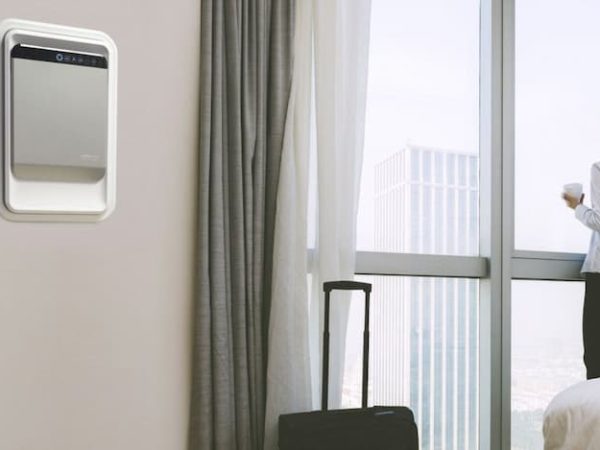
In an office, you share a workspace, ideas, and conversation, but also the air everyone breathes. And when things get busy and crowded, dust, allergens, pollutants and other airborne particles can quickly build up.
Poor air quality is a common concern in many facilities, so you want to do everything you can to create a healthier environment for your employees and visitors. There are plenty of reasons to do so. Clean indoor air is a productivity booster. It also means fewer sneezes, coughs and allergy flare-ups.
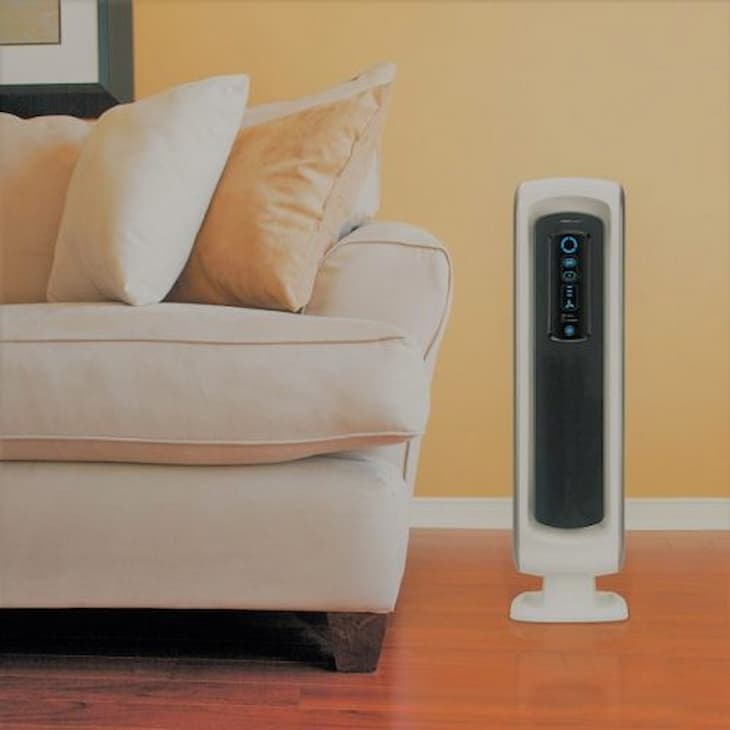
Simply put, office air purifiers help remove unwanted particles and pollutants from the air. Most consist of two main components: a fan and a filter. The fan draws indoor air through the filtration system, where different filters capture specific pollutants before cleaner air is released back into the room.
One of the most important things to consider when choosing an office air purifier is the type of filter it uses. There are three main types of filters for air purifiers: HEPA, carbon, and UV.
HEPA filters capture 99.97% of particles as small as 0.3 microns (the size at which particles are most difficult to filter). This includes common office allergens like dust, pollen, mould spores, bacteria and viruses. While HEPA filters excel at capturing particles, they can’t address gaseous pollutants.
Carbon filters, on the other hand, neutralise hazardous gases and adsorb odours from food, cleaning products, personal care items, and the various VOCs (volatile organic compounds) that accumulate in shared workspaces. In premises that deal with processes involving gas runoff or strong odours, a carbon filter is often the most sensible choice.
Air purifiers with UV filters are designed to reduce airborne microorganisms, including certain types of bacteria. They use UV-C light to damage their ability to grow and reproduce.
Air purifiers with UV filters can be used in workplaces where hygiene is a priority, such as medical centres, dental clinics, childcare facilities, laboratories and food-related businesses. In these environments, reducing airborne bacteria and other microorganisms can be an important part of maintaining a cleaner indoor space. UV filters are usually used in combination with HEPA filtration, which helps capture airborne particles before they are exposed to the UV light.
The first step in choosing an air purifier for your office is understanding the size and layout of the space. Air purifiers are rated based on the area they can cover, usually measured in square metres. For instance, a small private office may need a unit that covers around 15–25 m². A larger meeting room or open-plan workspace may require a purifier that covers 50 m² or more.
Next, know what you’re up against. Once you know what’s affecting your indoor air quality (whether it’s dust, mould, smells or airborne germs), you can choose a model that can tackle it.
Last but not least, consider the number of people and activities in your space. A meeting room that is only used occasionally will have different air purification needs than a busy open-plan office filled with printers and copiers (which can emit fine particles, ultrafine particles, ozone and small amounts of VOCs) and dozens of employees.
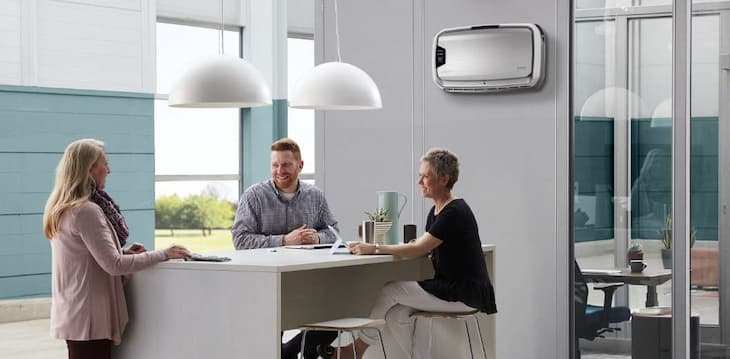
Modern offices can sometimes feel dull and sterile. Adding a touch of greenery brings a sense of calm and freshness. Moreover, indoor plants, when combined with an office air purifier, can help create a healthier and more inviting workspace.
The snake plant is an indoor plant known for cleaning the air. It’s tough, attractive, and doesn’t need much attention (just a bit of light and an occasional drink of water). It’s the perfect choice for offices where people still want a touch of greenery without the extra work.
Spider plants are also forgiving when it comes to care and can help improve indoor air quality. Their long, arching leaves make them ideal for desks, shelves, filing cabinets or hanging planters where they can add a fresh touch without taking up much workspace. Place them near natural light, such as beside a window or in a bright corner, and they’ll thrive with minimal attention.
The ZZ plant is another great choice for offices. It’s popular for its shiny, dark green leaves, its ability to thrive in low-light conditions and its air-purifying qualities. Place it near a window with filtered light, on a desk away from direct sunlight, or in a bright corner of the office. ZZ plants are very forgiving, so you only need to water them once the soil has completely dried out.
Regular professional cleaning is another simple way to improve indoor air quality. Daily cleaning helps keep an office looking presentable, but it’s not enough to remove the fine dust, allergens, and pollutants that accumulate in carpets, upholstered furniture, air vents, blinds and other hard-to-reach areas.
For this reason, consider hiring a commercial cleaning company to carry out regular deep cleans in addition to your routine office cleaning. A professional service can vacuum carpets using HEPA-filter vacuums, clean fabric furniture, wipe high surfaces where dust collects, sanitise shared workstations, and remove mould before it becomes a larger problem.
Depending on the office size, number of employees, visitor traffic and shared workspaces, you should schedule professional cleaning weekly, fortnightly or monthly.